Education & Institutional Change
Architecture schools do more than teach architecture. They reproduce the values, assumptions, professional norms and institutional structures of the discipline. They are also places where those structures can be challenged and changed.
My work in architectural education examines how curriculum, teaching practices and institutional organisation shape the profession architects eventually enter. Across inclusive design, professional practice, curriculum development and educational organising, I am interested in how architecture schools can do more than prepare students to work within existing systems: they can provide ways to question, redesign and transform them.
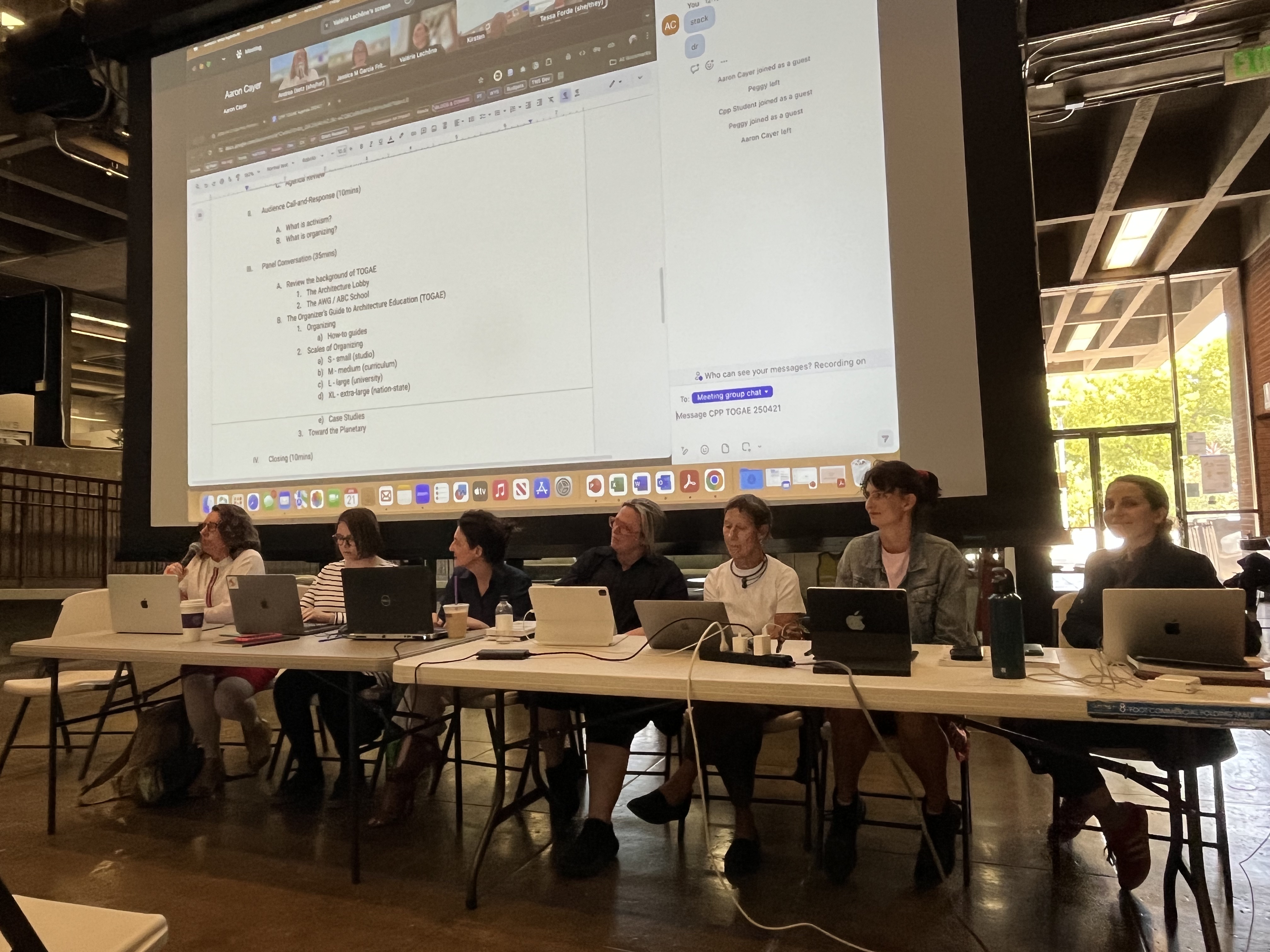
Organising architectural education
The Organizer’s Guide to Architecture Education (Routledge, 2024) examines architecture schools as institutions capable of collective action and change. Developed through international conversations with students, educators and organisers, the book looks at how people work within—and sometimes against—the structures of architectural education to create different cultures, practices and forms of agency.
The project sits within a broader interest in the institutional life of architecture: how authority is distributed, how professional norms are reproduced, and how apparently fixed systems can be changed through collective action.
Inclusive design education
A significant part of my teaching has focused on embedding disability, neurodiversity and embodied difference within mainstream architectural design education.
Rather than treating accessibility as a specialist topic or a matter of regulatory compliance, these studios ask students to begin with particular bodies, experiences and ways of inhabiting space. The aim is to shift inclusion from something added to architecture afterwards to something that shapes the design process from the beginning.
This work has developed across multiple design studios and collaborations with disability organisations, practitioners and students, and forms part of a wider research interest in the relationship between design standards, institutional assumptions and the bodies architecture is imagined to serve.
Curriculum and program design
Curriculum itself is a form of institutional design.
My current work includes the development of the Interior Design pathway within the Bachelor of Design at the University of Melbourne, with a particular focus on human-centred design, social justice, professional relevance and the relationship between interior environments, architecture and other disciplines.
This work also involves developing new areas of teaching in lighting, acoustics, professional practice and the psychology of space, and building connections across disciplines and professional communities.
The concern is not simply what individual subjects teach, but how a curriculum creates durable structures through which particular kinds of knowledge become part of the institution.
Professional education
My teaching in architectural practice sits at the intersection of education, regulation and professional responsibility.
I am particularly interested in how architects are prepared to exercise judgement within increasingly complex professional systems: contracts, regulation, procurement, accreditation, insurance and, more recently, artificial intelligence.
These questions extend beyond the university. My work with the Australian Institute of Architects and other professional bodies examines how architectural education, continuing professional development and professional regulation respond to changing forms of practice.
Education as institutional infrastructure
Across these projects, the recurring question is not only what should architects know?
It is also:
How do institutions determine what counts as architectural knowledge?
Whose experience is embedded in the curriculum?
Which professional assumptions are reproduced?
And how might education become a place where those systems are redesigned rather than simply inherited?
For me, education is therefore not separate from research into architectural systems. It is one of the places where those systems are made—and where they can change.

