Digital preservation, emulation, architectural archives, software, provenance.
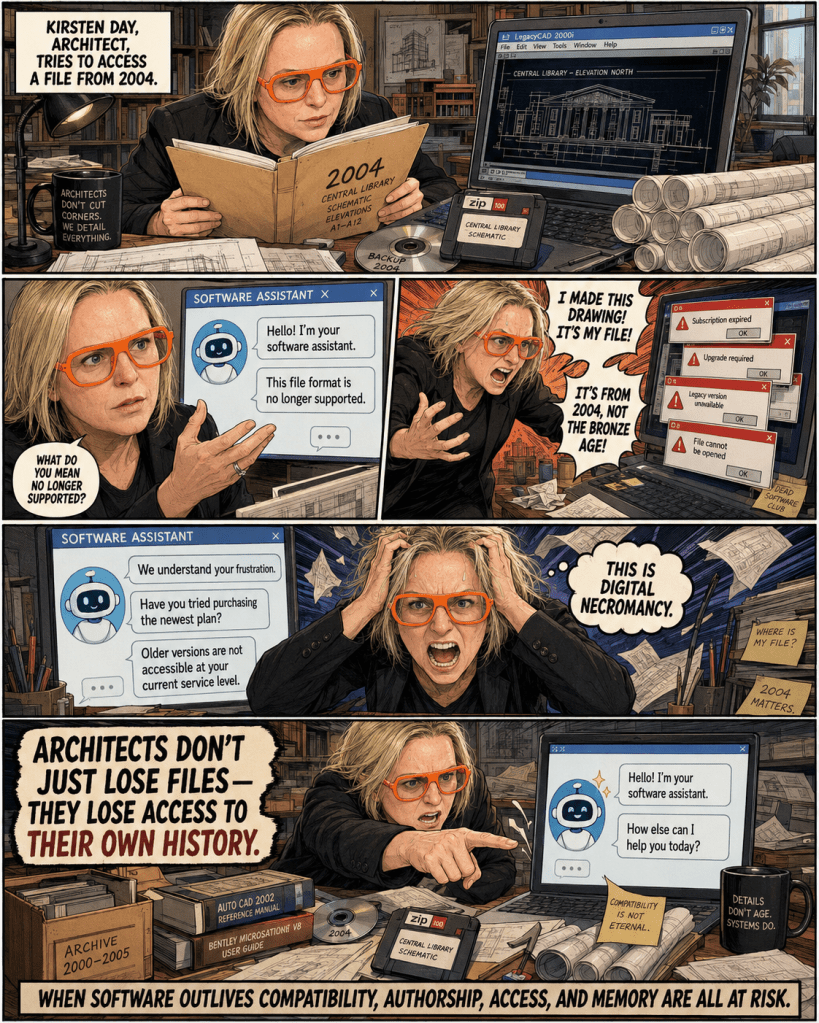
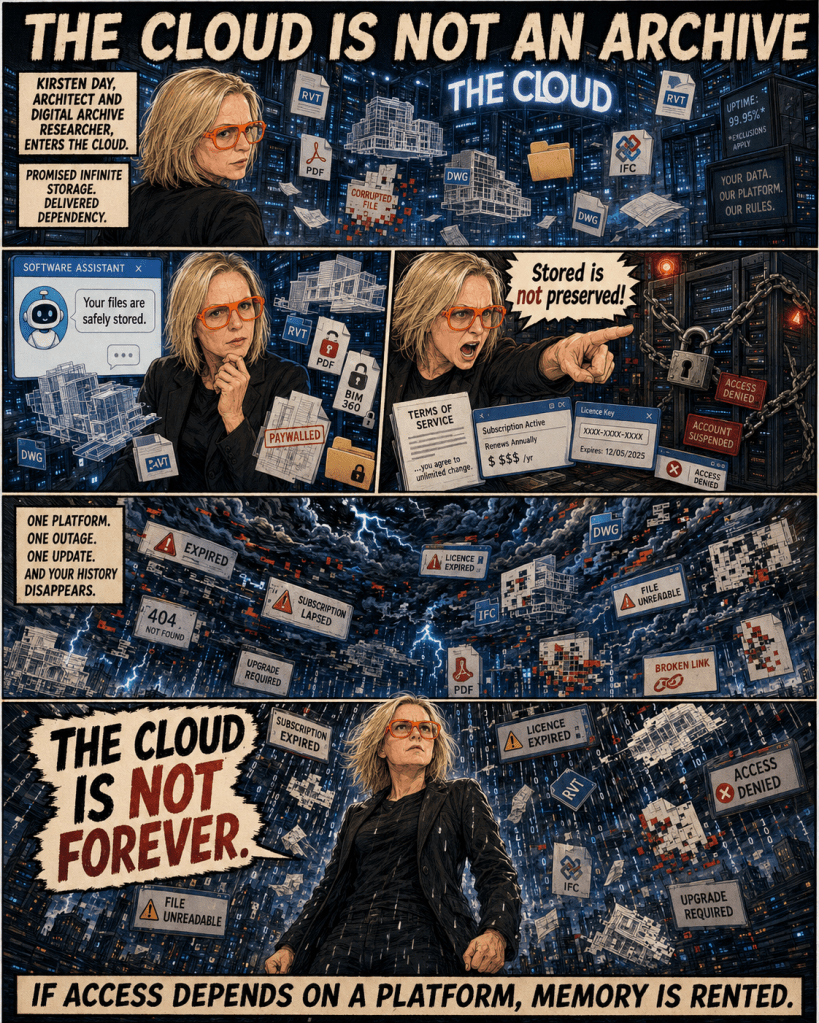
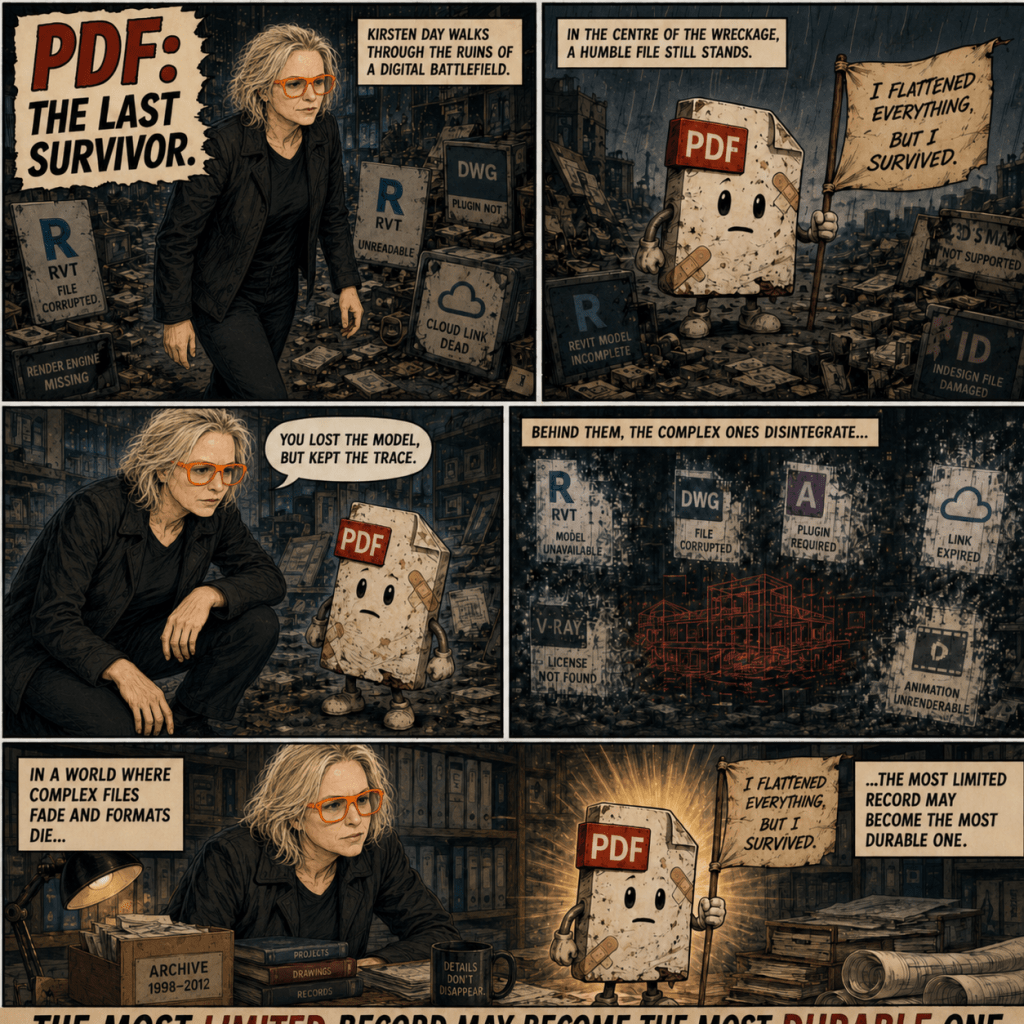
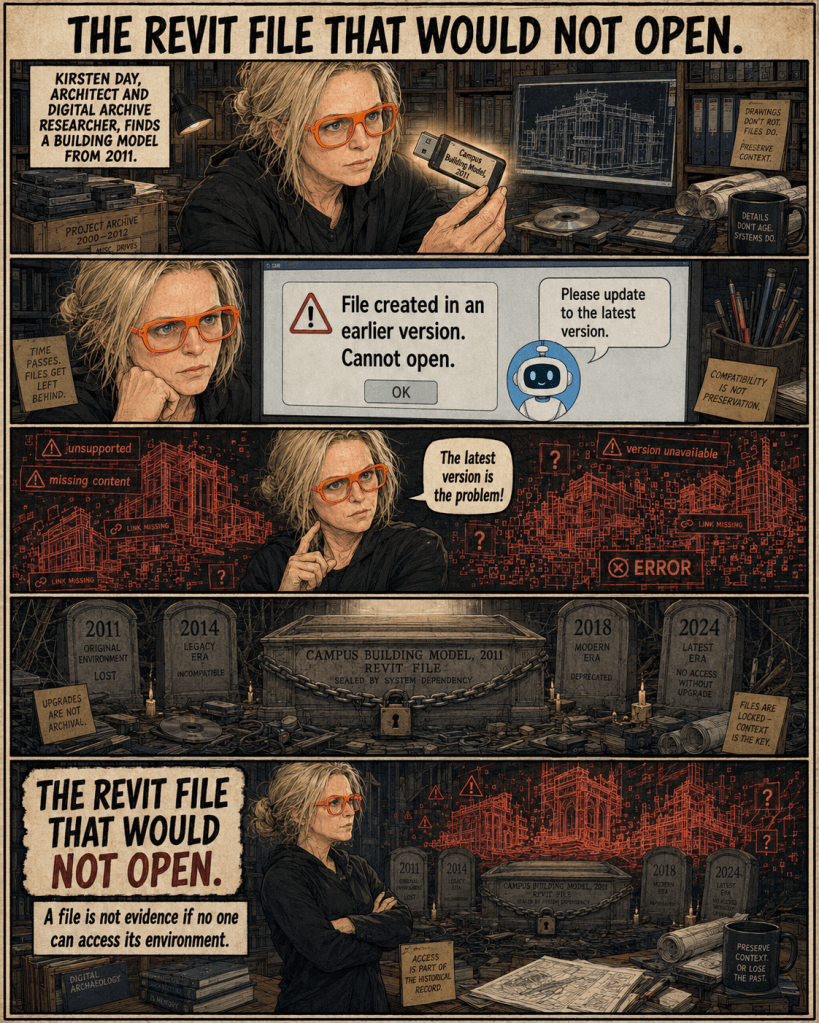
Digital archives are not inert repositories — they are fragile, often unstable performances of memory. In architecture, what we once preserved through drawing is now scattered across proprietary file formats, obsolete software, and cloud storage infrastructures optimised for convenience, not continuity. My research investigates how emulation — the digital mimicry of past computing environments — can serve as a critical method for accessing, understanding, and resisting the structural vulnerabilities of our digital design heritage.
This work is supported through two ARC LIEF grants: LE220100057 The Australian Emulation Network: Born Digital Cultural Collections Access, and LE250100051 The Australian Emulation Network Phase 2 – Extending the Reach. An ARC Future Fellowship application on digital fragility in the built environment is currently under assessment. I was CI 17 on the shortlisted ARC Centre of Excellence in Born Digital Cultural Heritage (CE260100027).
Emulation is not about nostalgia; it is a tool of resistance. It enables access to unreadable CAD files, defunct plug-ins, and projects stranded within subscription-only ecosystems. Through interdisciplinary methods spanning architecture, archival theory, and platform studies, my work explores how emulation might not only restore lost data but also expose the cultural and technical conditions that endangered it in the first place.
This approach positions the archive as both a technical system and a site of power. Whether working on the Gregory Burgess Architects Archive, partnering with GLAM institutions, or examining legacy workflows in Australian architectural practice, I focus on what disappears, who controls disappearance, and how designers might reclaim agency over their digital pasts — before memory is overwritten by the next software update. In 2022, I curated two exhibitions on the Burgess Archive: at the Dulux Gallery (Melbourne School of Design) and the Noel Shaw Gallery (Baillieu Library, University of Melbourne), bringing four decades of architectural practice — from hand-drawn sketches to early digital files — into public view.
I am currently writing a book on the archival crisis in architecture, examining how software obsolescence, proprietary lock-in, and the absence of governance frameworks are erasing the design knowledge embedded in born-digital records.
Blog
Obsolescence Isn’t an Accident — It’s a Business Model
Selected Articles & Publications
- “Emulating the Past, Envisioning the Future: A Study of CAD File Preservation in Australian Architectural Practices”
ARCOM Conference Proceedings (2024)
Read here - “The Border of Lost and Found: The Role of Emulation in Accessing Obsolete Digital Works”
Border Control Symposium, Canterbury (2024) - “Reconstructing the Unbuilt Designs of Glenn Murcutt”
ArchitectureAU (2024)
Read here
Collaborators and Partners

