Venice Biennale 2025
At the 2025 Venice Biennale, Dr Kirsten Day contributes to two installations that address questions of exclusion, labour, and agency in architecture. The Digital Dérives of Ableist Cities, created in collaboration with Peter Raisbeck and Andrew Martel, is a 20-minute video work exploring the spatial experiences of disabled and dis/ordinary individuals. Drawing on digital ethnography and the Situationist dérive, the project builds on the Ableist Cities Symposiums to highlight structural barriers embedded in urban environments.
Day also appears in Organizing in the Lobby, presented by The Architecture Lobby (TAL), where she interviews Parlour co-founder Justine Clark as part of a broader international showcase of architectural labour activism. Installed beside the Biennale’s Speaker’s Corner, TAL’s contribution directly critiques the reliance of the Biennale itself on unpaid labour. The invitation to participate sparked significant internal debate, with some members declining to be named in the project. Day chose to remain involved—recognising the tensions, but also the importance of contributing to global conversations around equity and collective agency in architectural practice.
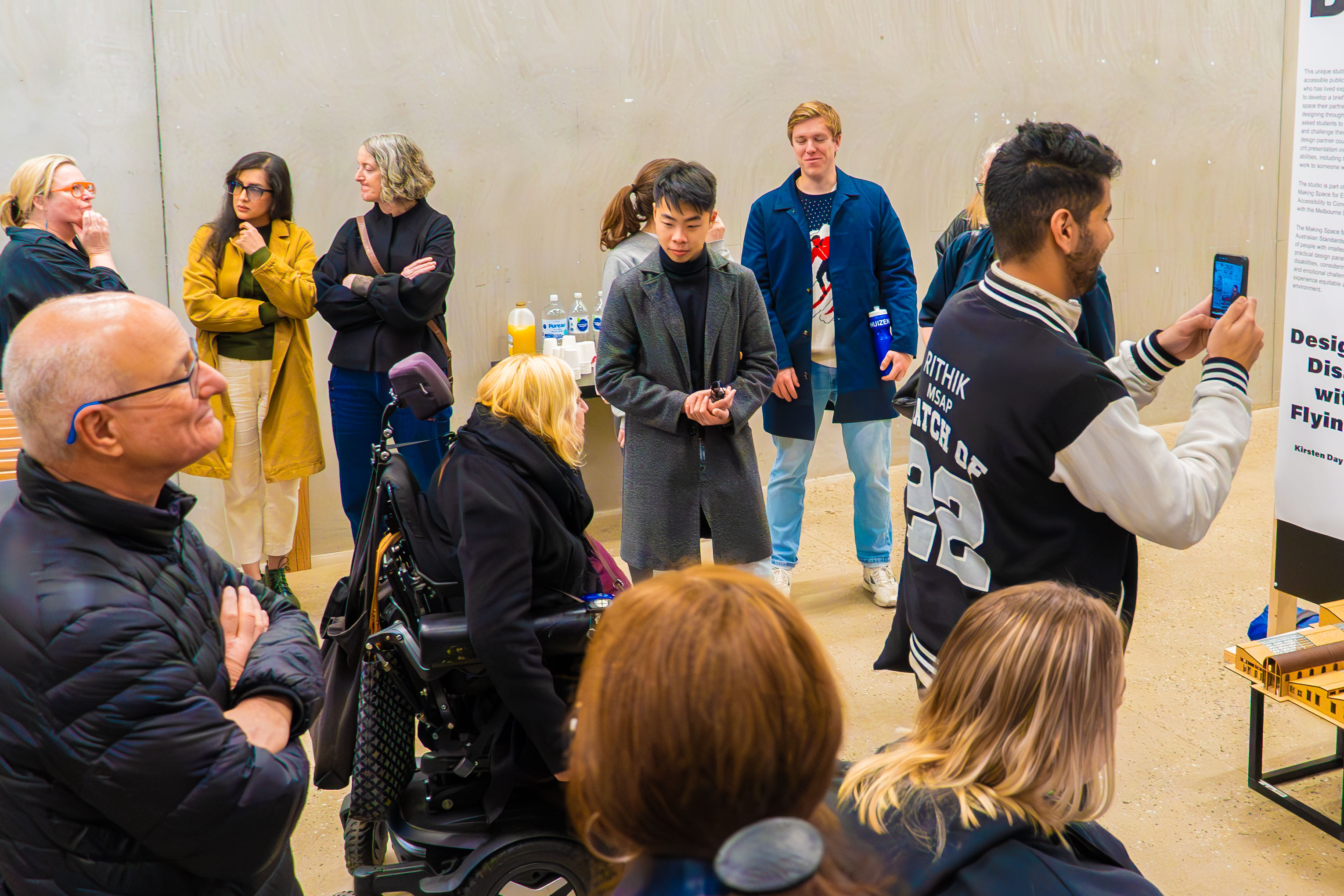
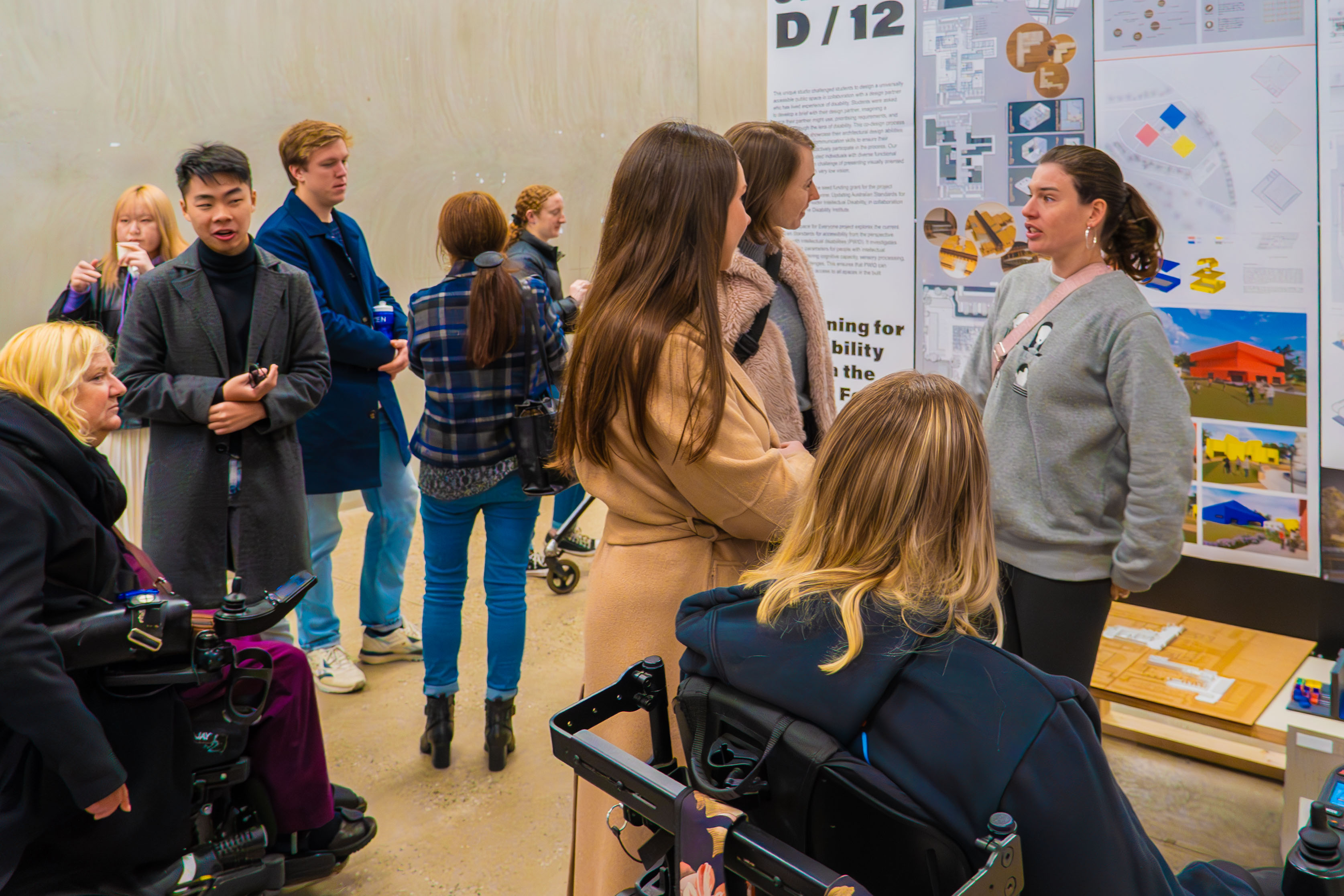
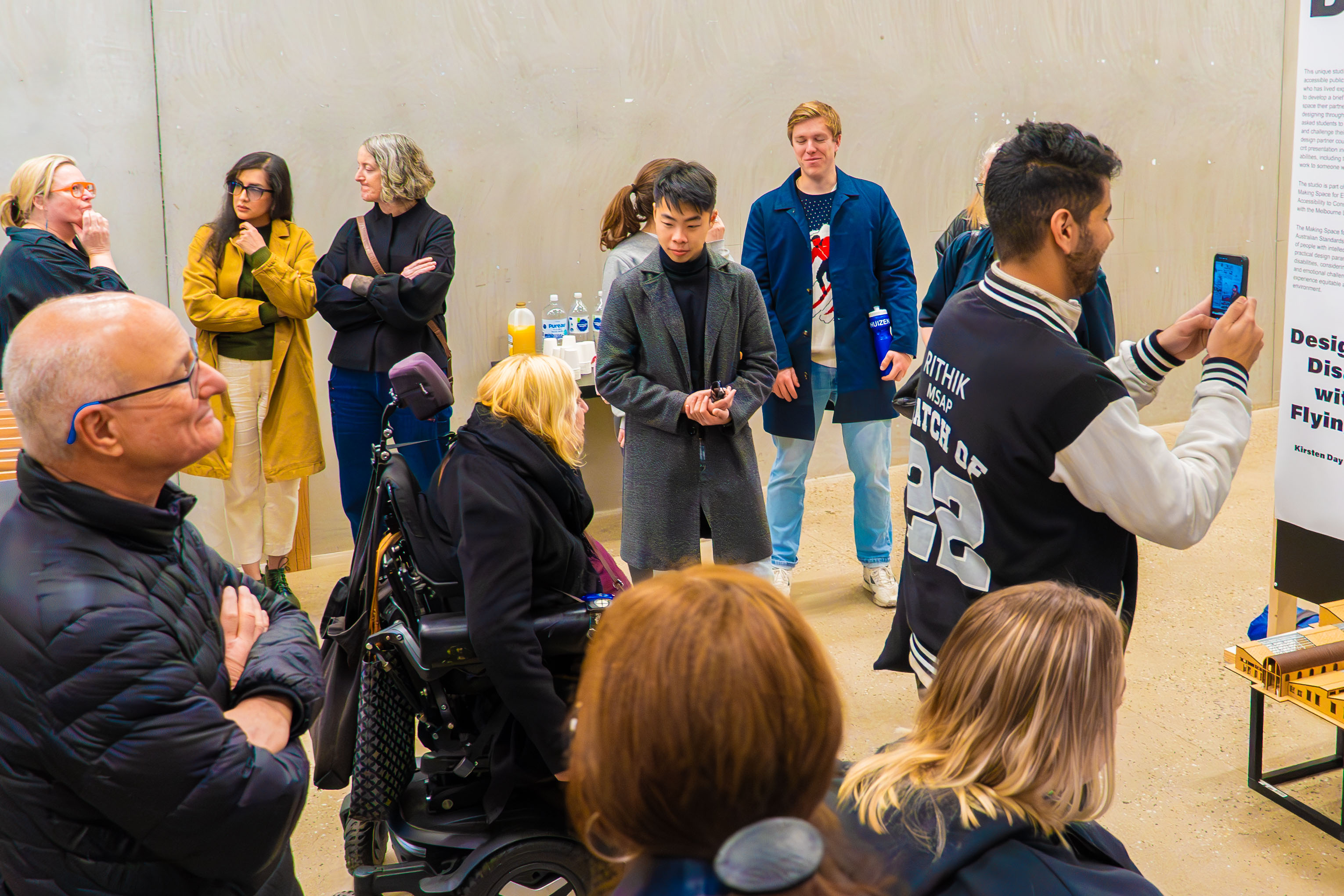
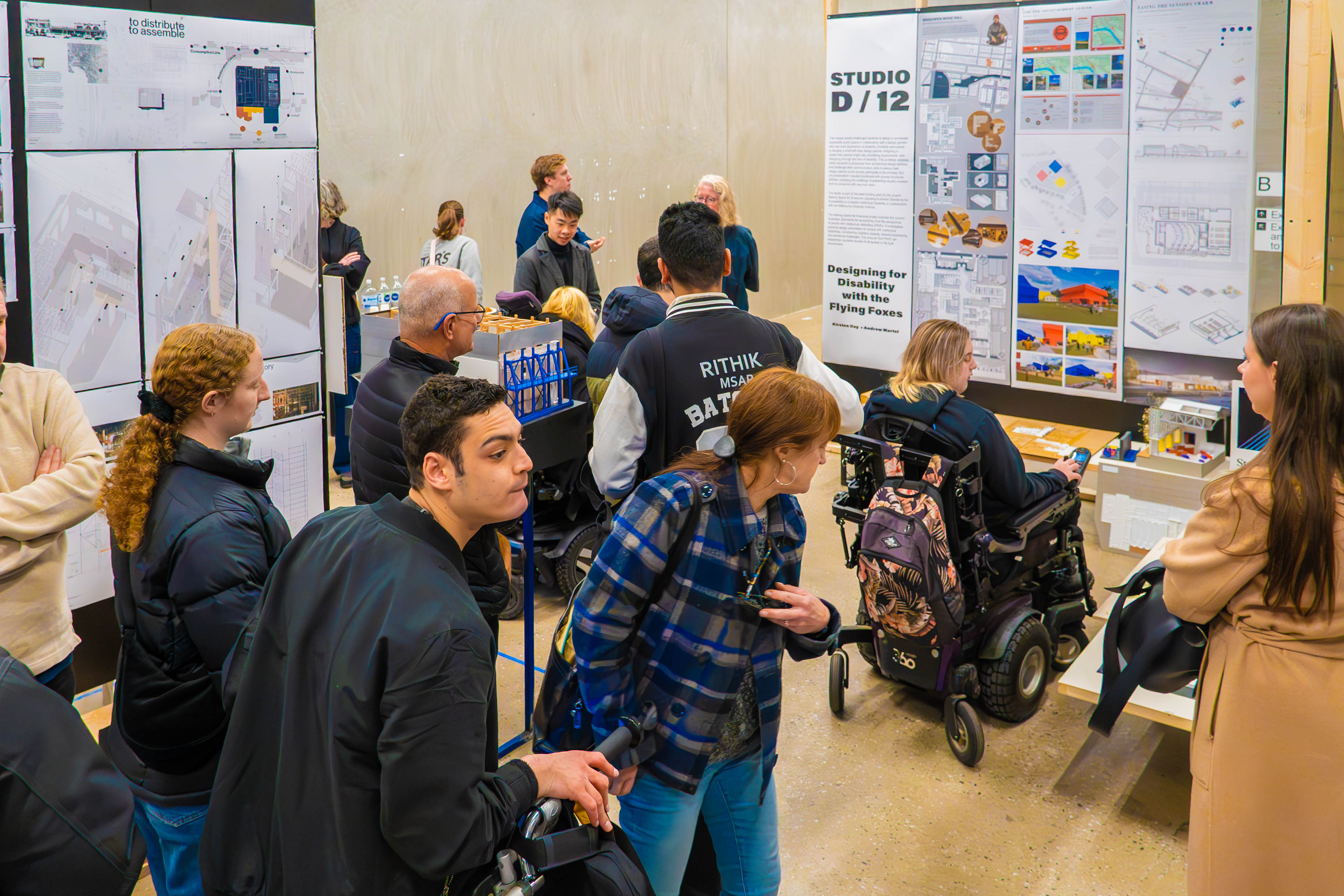
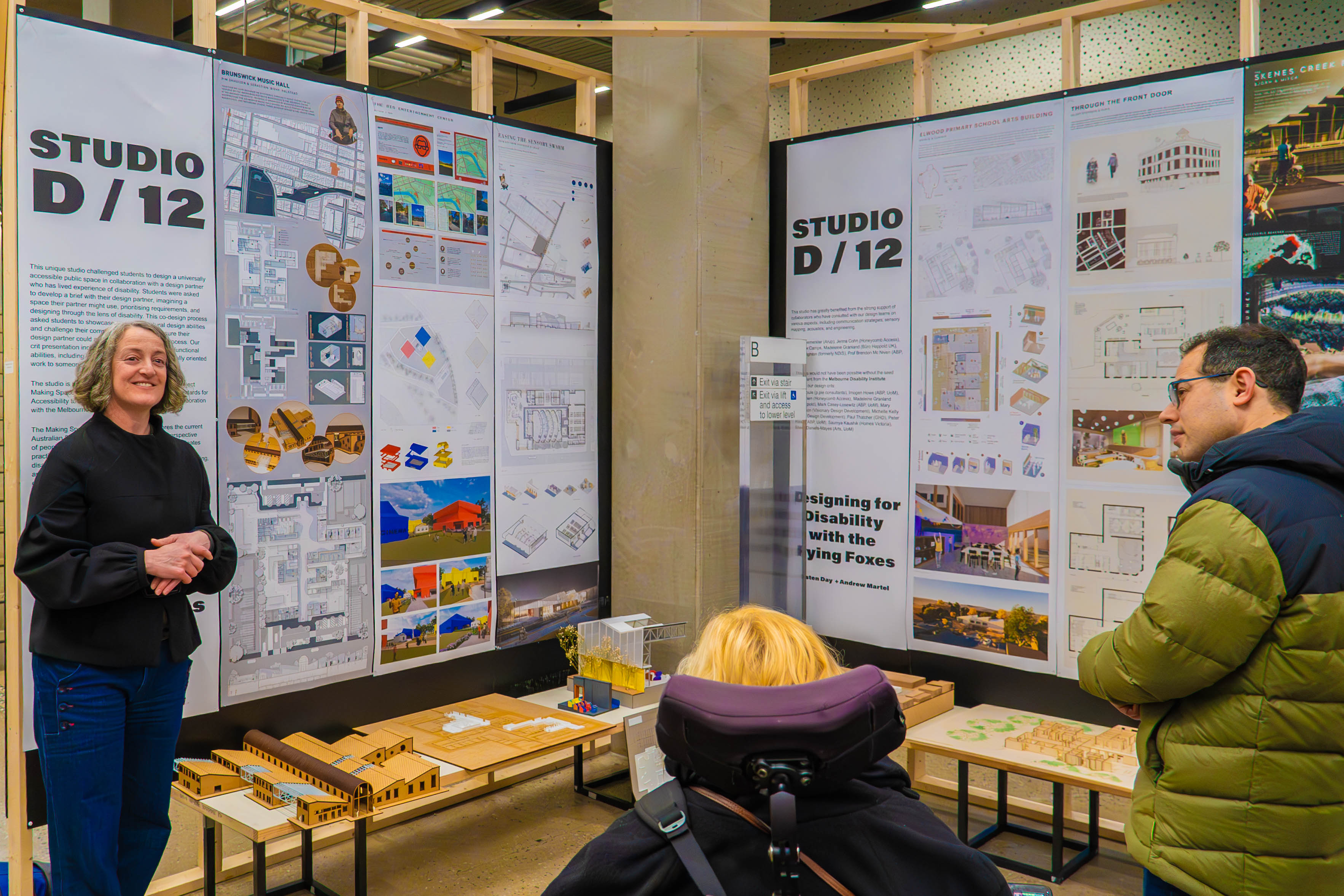
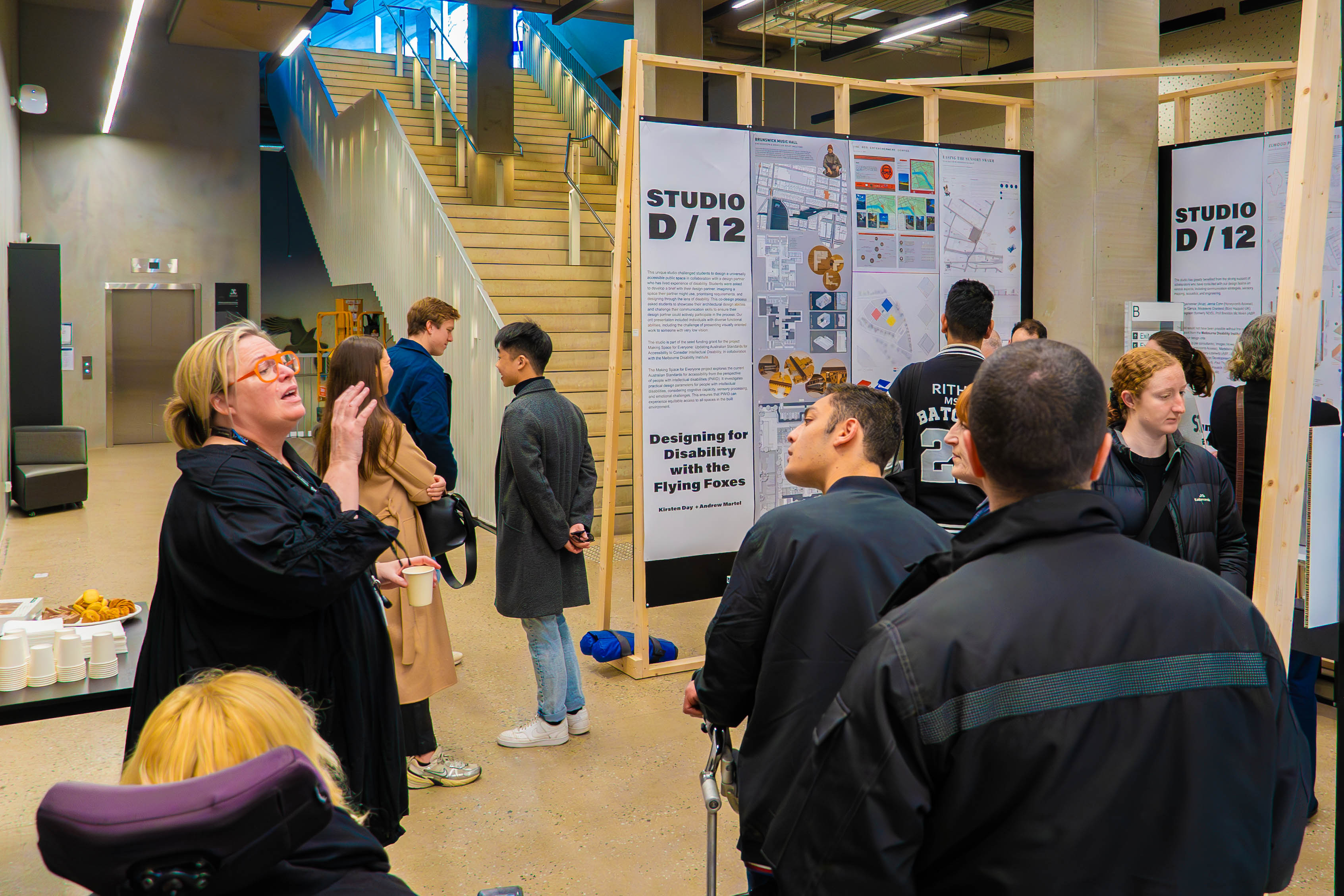
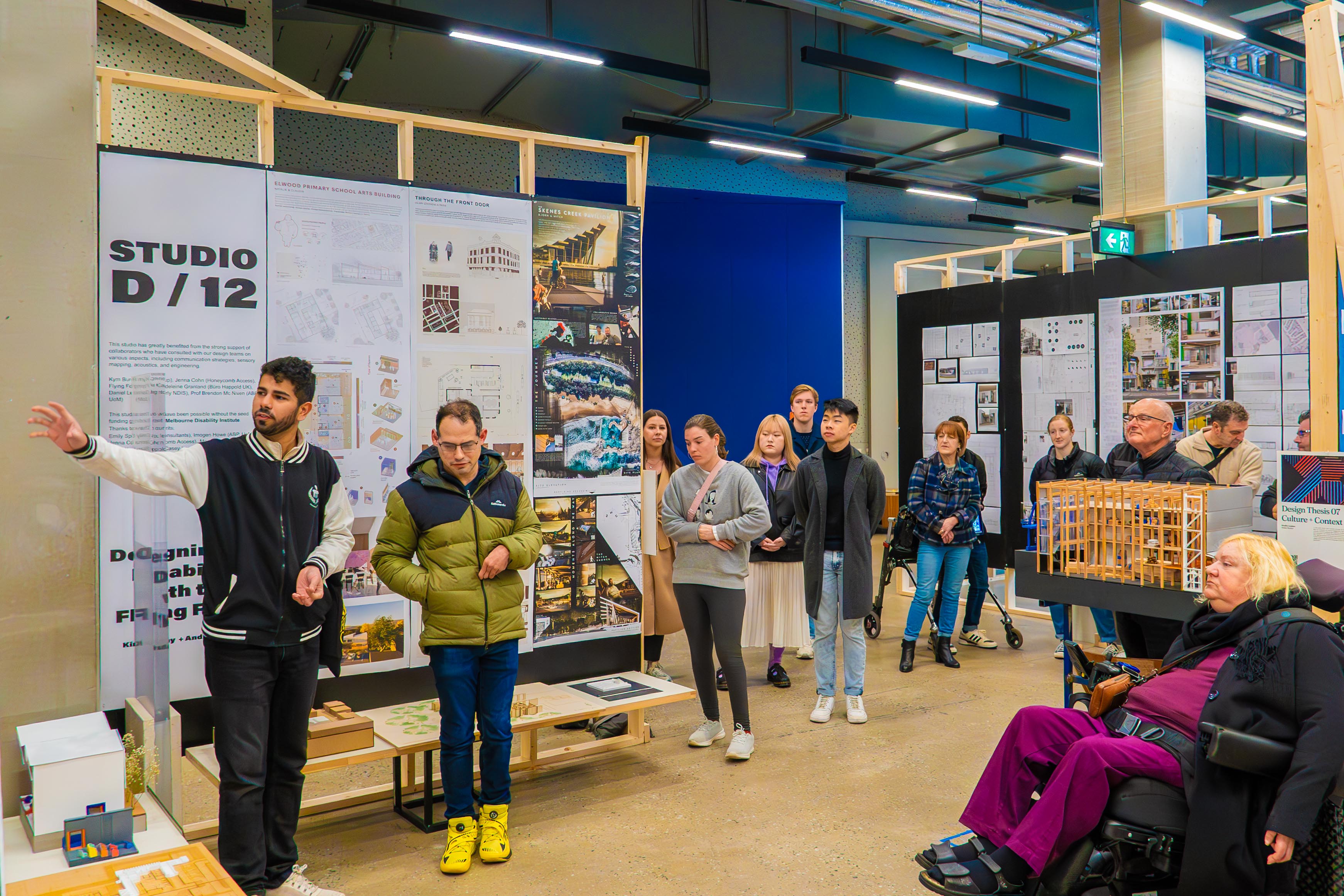
Designing for Disability with the Flying Foxes: Studio D12 Melbourne School of Design, The University of Melbourne
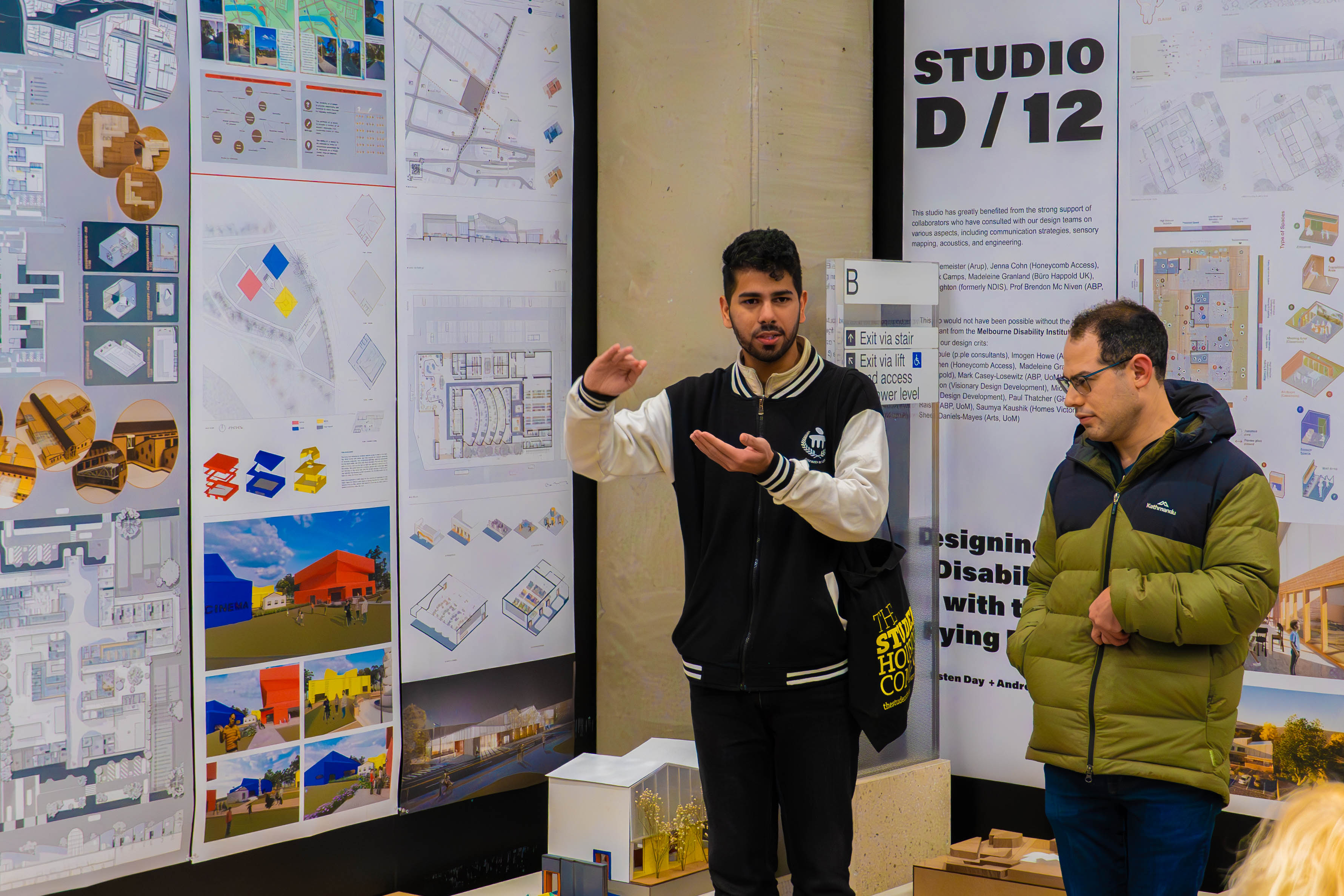
Designing with the Flying Foxes: D12 Co-Design Studio, MSD:
Alt tile – Co-Design is Not a Metaphor
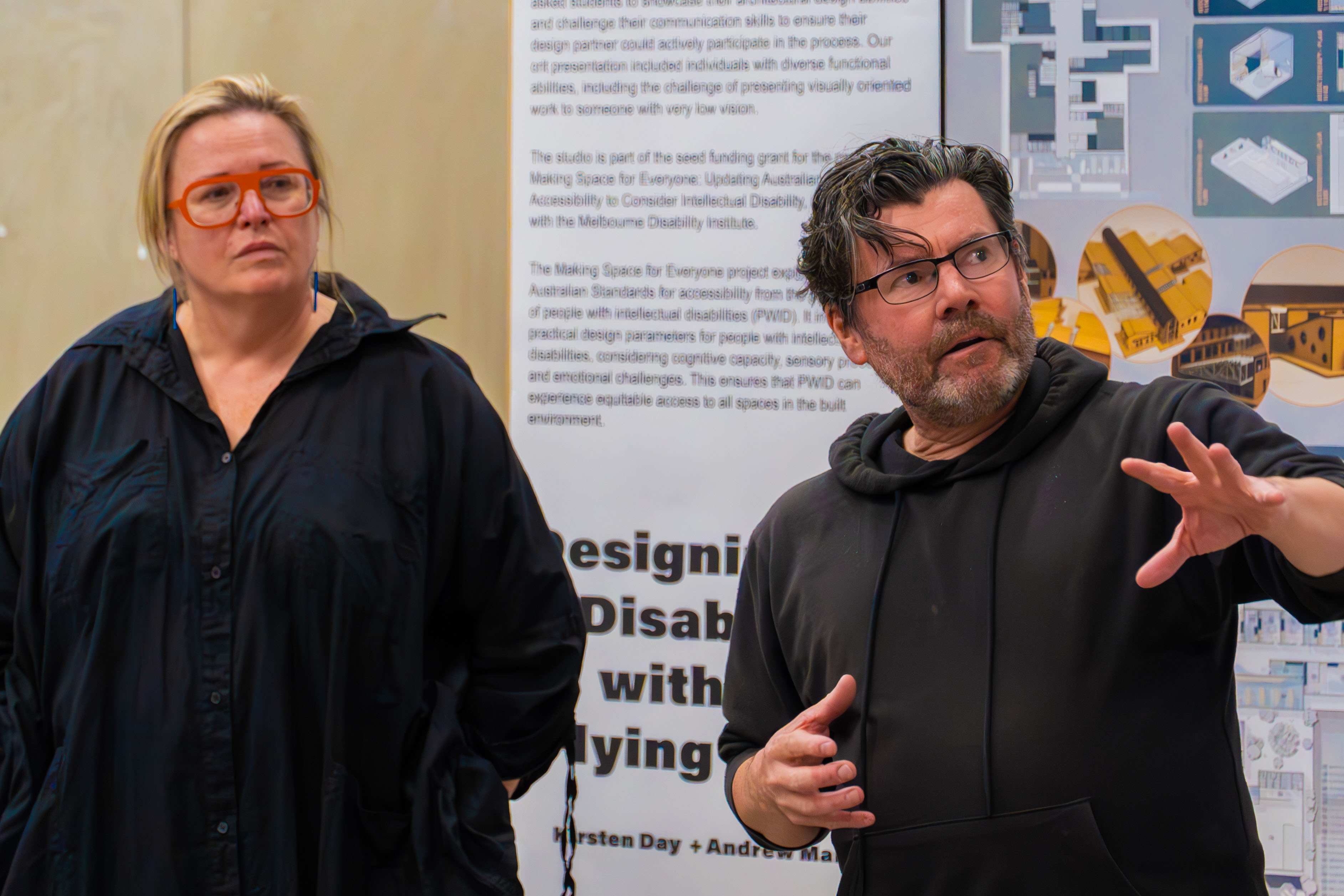
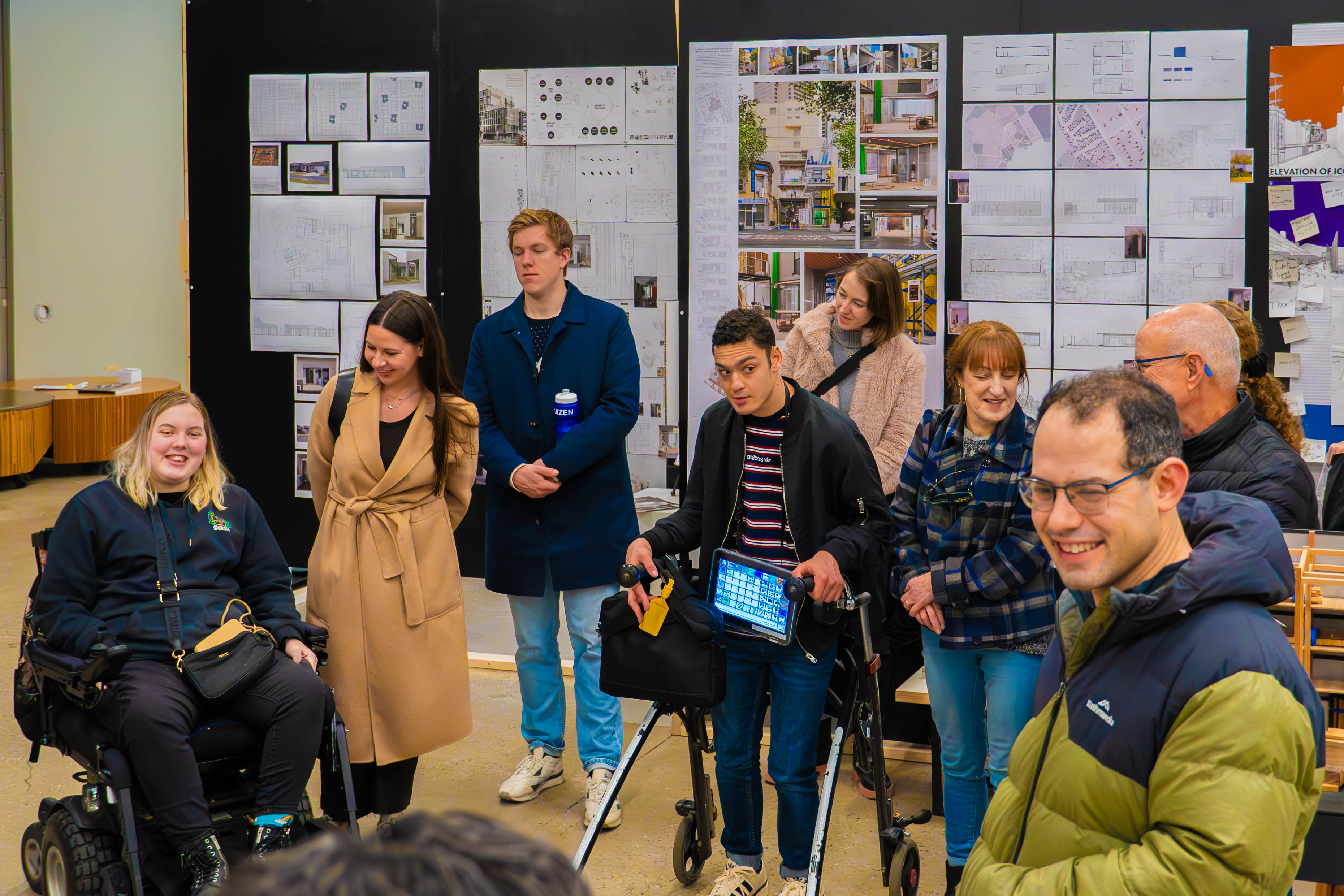
At the end of semester, Studio D12 didn’t just present to a panel of academics and the usual crit panel. They presented to their design partners—their collaborators, their critics, and in many cases, their friends. These weren’t hypothetical users pulled from a persona matrix. These were real people with lived experience of disability, who shaped every part of the process, from the brief to the blueprint.
The brief? Simple on paper, impossible in practice:
Design a public space that’s universally accessible—together.
The students didn’t just design for someone. They designed with someone. And that changes everything.
This wasn’t a studio about ticking standards boxes or designing according to existing codes. It was about exposing the limits of those codes. It was about asking: what happens when architectural education stops simulating inclusion and starts making room for it?
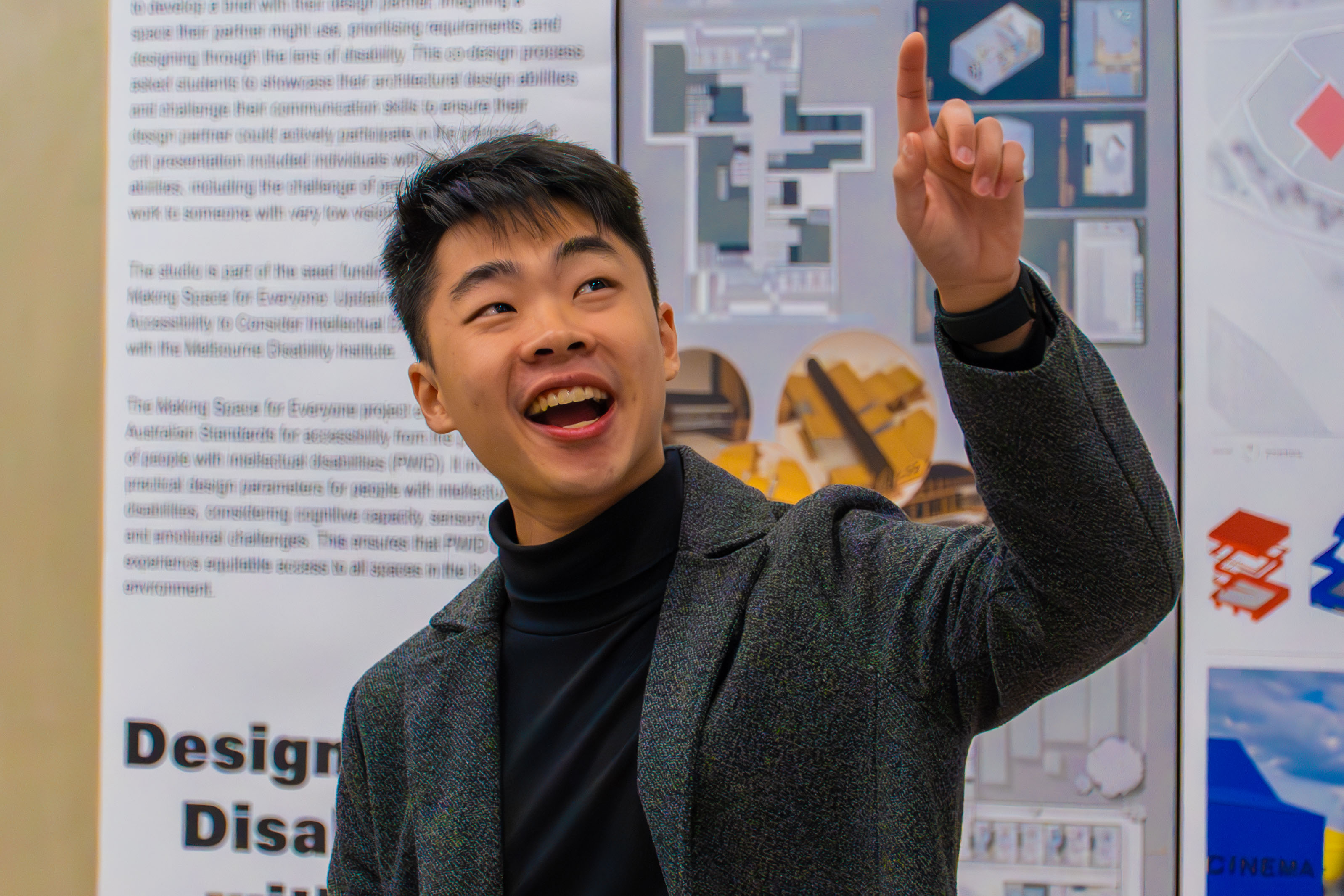
Students developed projects in full collaboration with individuals with intellectual disabilities, confronting the reality that architectural communication is built for a visual, neurotypical audience. When one of your partners has very low vision, a printout and some jargon won’t cut it. You learn to speak differently. To listen harder. To unlearn the idea that architectural drawings are self-evident. They aren’t.
This studio was made possible through seed funding from the Melbourne Disability Institute as part of Making Space for Everyone: Updating Australian Standards for Accessibility to Consider Intellectual Disability. Yes, that’s a long name. But so is the list of things current standards ignore: cognitive access, sensory processing, emotional safety. The project’s aim is clear: change how accessibility is defined—and who gets to define it.
Massive thanks to Jenna Cohen and the incredible crew at Flying Fox for introducing us to our design partners, and for proving (again) that inclusion is not an afterthought. It’s the work.



Building Reform: Industry Theatre or Real Change?
Panel Discussion, MSD, July 2023
The building industry loves a reform headline—less so the structural work it actually requires. That’s why this event didn’t waste time with platitudes. It brought together the people who build, fund, legislate, and draw the city—into one room, with nowhere to hide.
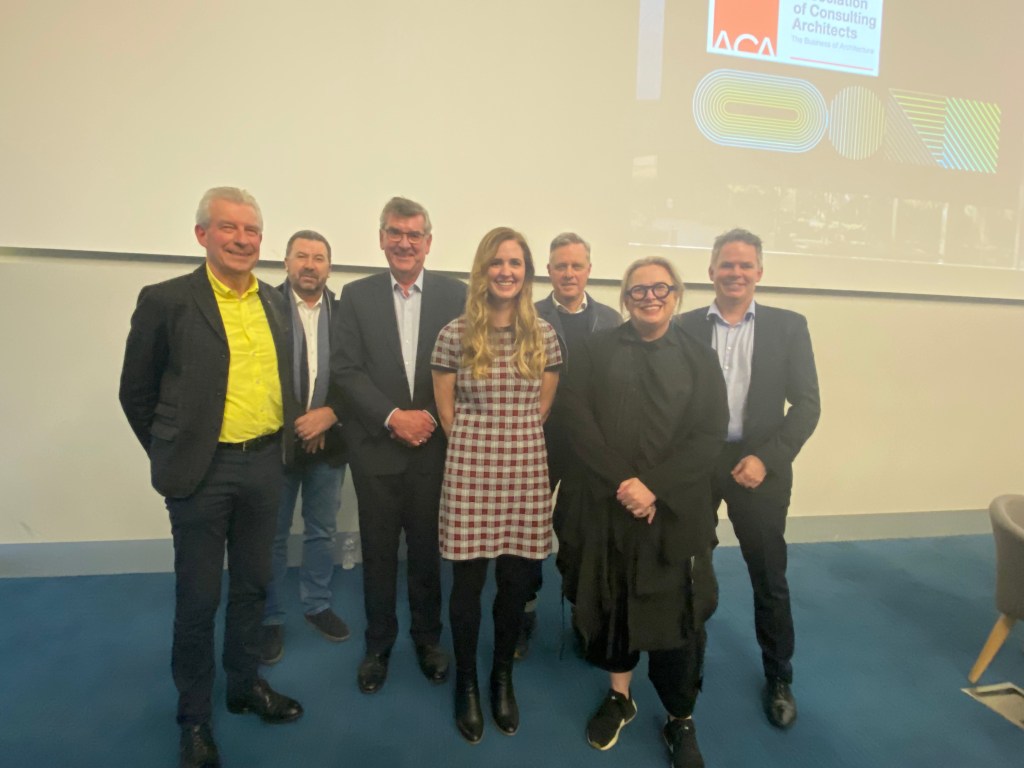
Co-organised by Dr. Kirsten Day and A/Prof. Peter Raisbeck, the panel Victoria’s Future Cities, Suburbs, and Building Reforms tackled the uncomfortable truths shaping the future of construction. Held at the Melbourne School of Design and sponsored by the Association of Consulting Architects, the event was an unapologetically direct confrontation with the broken mechanics of procurement, risk, transparency, and labour in the building industry.
Panellists included:
- Peter Elliott AM LFRAIA, architect and urban pragmatist
- Michaela Lihou, CEO of the Master Builders Association of Victoria
- Tom Trevaskis, CEO of Burbank Property Group
The panel was moderated—brilliantly and provocatively—by Peter Maddison, architect and host of Grand Designs Australia. And yes, he asked the questions you’re not supposed to ask on stage.
Dr. Day opened the event with a call for sector-wide accountability: for procurement processes that aren’t ethically bankrupt, for professional standards that don’t collapse under developer pressure, and for reforms that move beyond regulatory theatre.
The Hon. Ted Baillieu AO, former Premier of Victoria, delivered a final Q+A commentary that didn’t pull punches—calling out the industry’s trust deficit and the need for radical transparency.
And a quiet but necessary shoutout to Rosanna Verde, whose coordination kept the wheels turning while everyone else debated who built the tracks.
Link to YouTube: https://www.youtube.com/watch?v=KhCJl4Pmx4Y
Podcast: What is the future for cities with Fanni Melles 9 March 2022

 Dr Kirsten M Day